
- 91%
- U.S. net import reliance in 2025. None was mined domestically from 2001 to 2024
- 85%+
- of world mine production from China, Russia and Tajikistan, on falling global supply

A critical mineral
Antimony, a critical mineral with no substitute
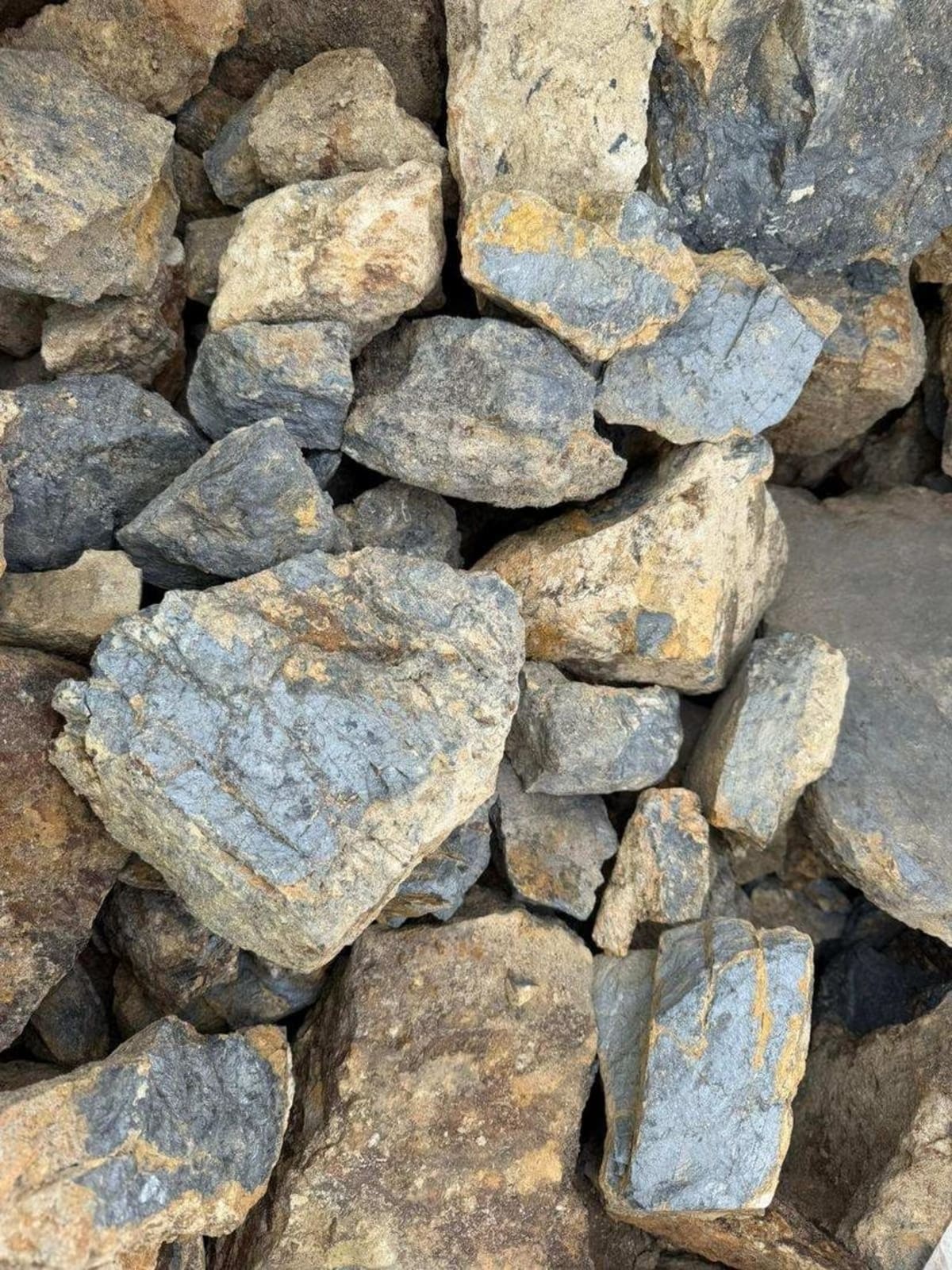
Antimony is identified by the United States as a critical mineral, for its importance to national security and the broader economy. Its main mineral is stibnite, antimony sulphide, and its uses run from flame retardants to energy storage. Defence is where it cannot be replaced: hardening alloys in ammunition, flame-retardant systems in aircraft and electronics, and specialised semiconductors for night vision and infrared detection.
- Ammunition primers
- Armour hardening
- Night vision
- Infrared
- Flares
- Flame retardants
The supply
Antimony supply, removed by policy, not by a price cycle
Three countries mine most of the world's antimony. China announced export controls in August 2024 and banned shipments to the United States in December 2024. The prohibition on U.S. military end users remains in force. This is policy, not a market cycle.
World antimony mine production, 2025: 94,000 of 110,000 tonnes from China, Russia and Tajikistan (USGS Mineral Commodity Summaries 2026)
At home
No U.S. antimony mined from 2001 to 2024
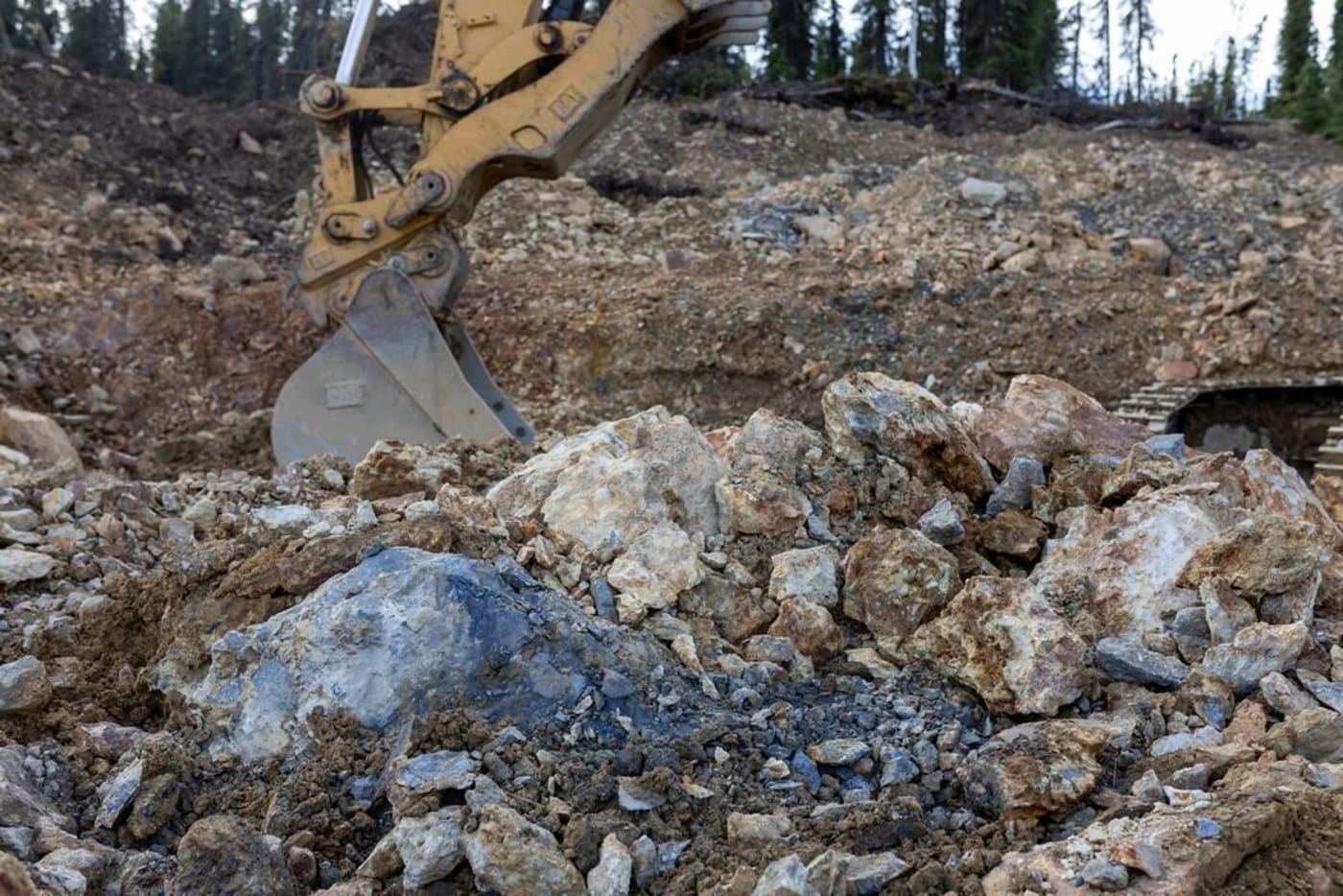
The United States imports nearly all its antimony. One company restarted mining in Montana in 2025, and its output is withheld as proprietary. In approving the Treasure Creek bulk sample permit, the Alaska Department of Natural Resources noted the absence of a primary U.S. antimony mine since 2001, the country's reliance on imports, predominantly from China, and renewed federal efforts to secure non-Chinese sources for the U.S. defence industrial base.
"The United States cannot refine antimony it does not have, and it cannot import its way out of a supply chain controlled by others."
Military grade
Military-grade antimony, the scarce part of the market
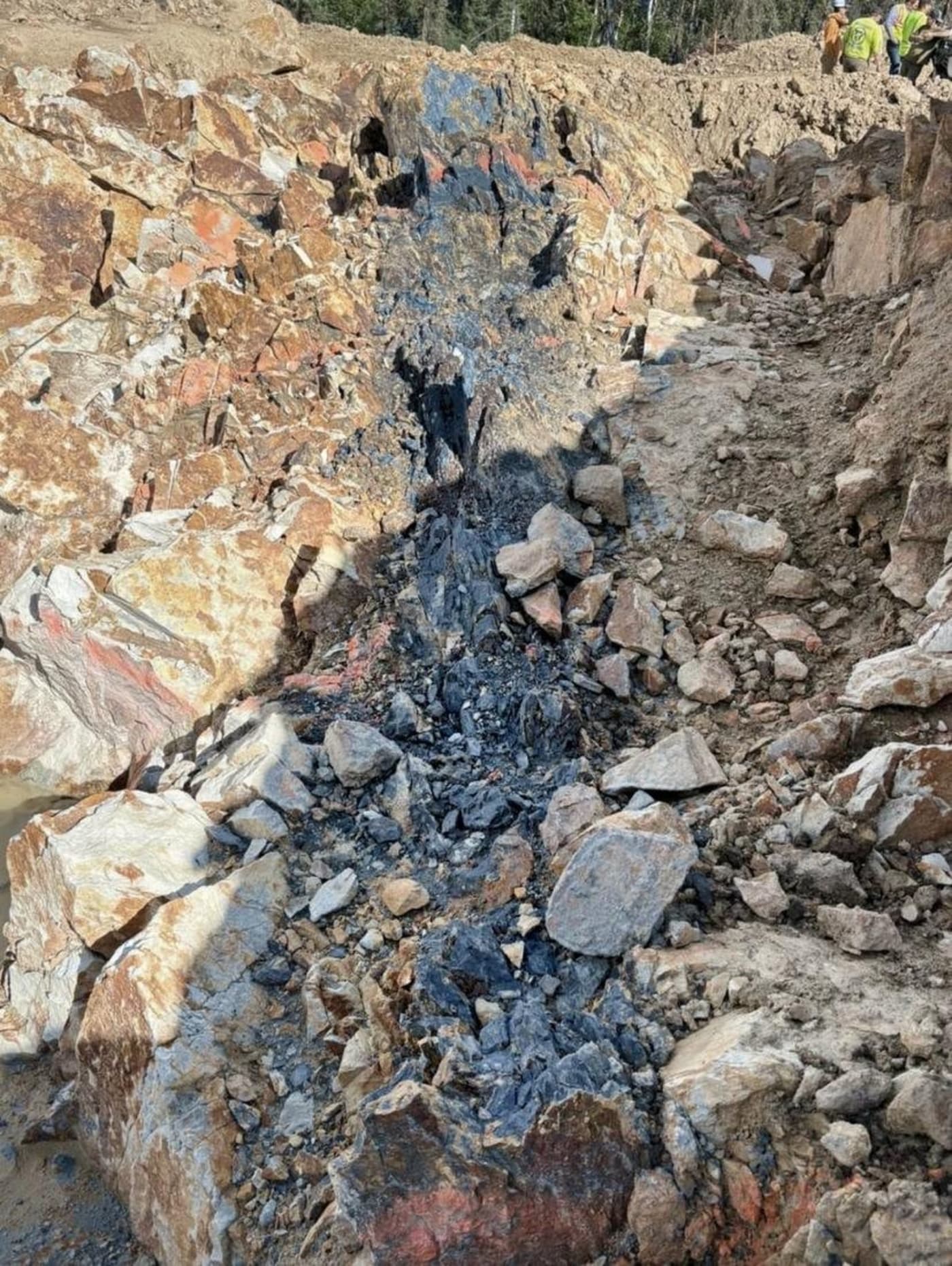
Military-grade material (MIL-A-22131, 70% Sb or better) is the scarce part of the market, and commodity antimony does not meet it. Most antimony ores need several stages of beneficiation to reach military grade. Treasure Creek direct shipping material meets it before processing, and pilot plant work indicates a simplified route with no grinding, flotation or concentrate stage.
- 70% Sb
- MIL-A-22131 requires 70% Sb or better
- 71.9% Sb
- Direct shipping material, Bundtzen Vein, meeting MIL-A-22131 before processing
Selected high-grade samples, not average grades. No antimony Mineral Resource or Ore Reserve is declared. Full cautionary statements
Washington
Washington's response to the U.S. antimony supply gap
Washington has responded with capital: Defense Production Act Title III awards, Department of Energy funding and National Defense Stockpile procurement since 2023. Executive Orders 14156 and 14241 declared a national energy and minerals emergency, naming antimony as a critical material with limited domestic production.
- Since 2023Defense Production Act Title III awards, DOE funding and National Defense Stockpile procurement
- Aug 2024China announces export controls
- Dec 2024China bans shipments to the United States
- EO 14156 · 14241A national energy and minerals emergency; antimony named a critical material with limited domestic production
- Aug 2026The U.S. Department of Energy selects Felix Gold for negotiation of up to US$18 million
In August 2026 the U.S. Department of Energy selected Felix Gold for negotiation of up to US$18 million in non-dilutive federal funding for the Treasure Creek Antimony Pilot Processing Facility, one of nine projects selected nationally under a US$162 million program. The amount and its application are subject to award negotiation and DOE approval. Negotiations are continuing, and the award, if made, is now expected later than the up to 120 days indicated in August 2026.
DOE selection is not a commitment to fund; no funding has been obligated. Full cautionary statements
"Our strategy has never depended on federal money. It is accelerated by it."
A historic U.S. supplier
Treasure Creek, a historic U.S. antimony supplier
Treasure Creek is ground with a production history, not a greenfield discovery. It supplied the United States across three wartime periods, and Scrafford, within the project, was Alaska's second-largest antimony mine.
The solution
American antimony, from mine to metal
Felix Gold holds a Bulk Sample Permit at Treasure Creek, under which extraction at the Bundtzen Vein continued and mineralised material was stockpiled. Frontier Antimony Refinery Corp., its wholly owned Delaware subsidiary, is the Group's U.S. refining, metal production and marketing platform, with feed from Treasure Creek intended under an intra-group supply agreement, targeting military-grade antimony metal for the U.S. defence industrial base. On 27 August 2026 a pilot plant replicating Frontier's proposed refinery flowsheet converted Treasure Creek mineralised material to cast antimony metal.
Pilot scale, batch mode; XRF grades indicative, assays pending; final refining stage not undertaken; no production target. Full cautionary statements

Felix Gold and Frontier
Rebuilding America's antimony supply chain


Market figures: USGS Mineral Commodity Summaries 2026; Fastmarkets; United States Government publications. Third-party and market data are unverified and provided for context only. Forward-looking statements, Mineral Resources and Competent Person information: See cautionary statements. Visual estimates of mineral abundance should never be considered a proxy or substitute for laboratory analyses where concentrations or grades are the factor of principal economic interest.