
Health and safety
Work under Mine Safety and Health Administration rules, with exposure monitoring and crew safety training

Make sure everyone goes home safe, and prioritise the health and wellbeing of our people and our local community.

Minimise disturbance by design, and reclaim disturbed ground as we go, not at closure.

Engage transparently with regulators, our neighbours and the wider Fairbanks community.
Community consultation is ongoing.
Our approach is early and ongoing community engagement to understand local priorities and address potential issues, with environmental studies and small-scale methods that reduce surface disturbance.
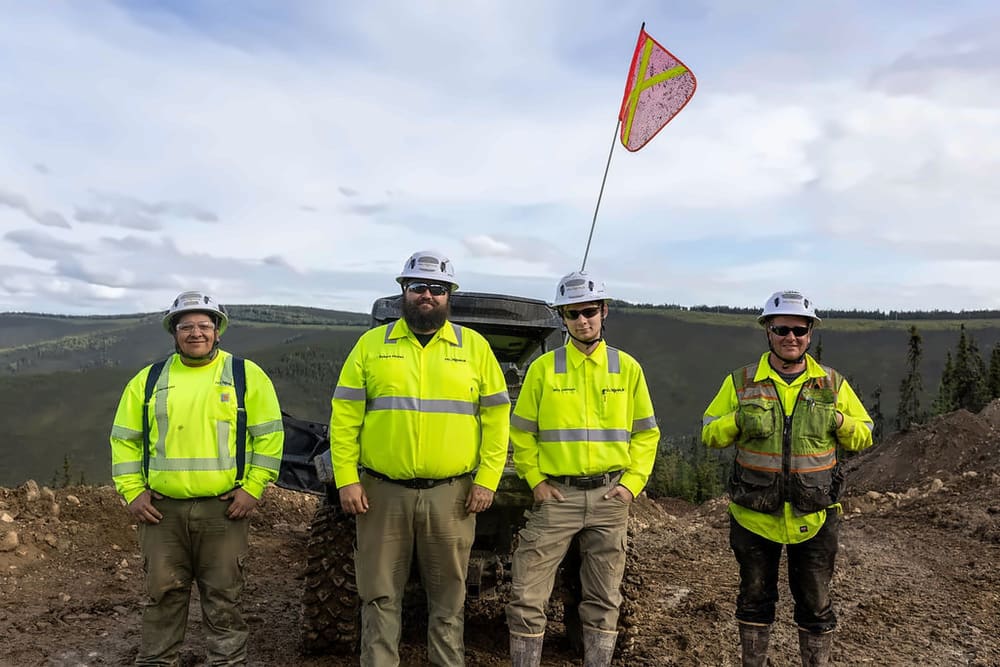
Work under Mine Safety and Health Administration rules, with exposure monitoring and crew safety training
Drill pads and access kept to the minimum footprint, drilling fluids contained at the pad, and extraction confined to the permitted area at the Bundtzen Vein, with waste rock retained on site
A meteorological station and air monitoring, surface water quality and flow monitoring across the project's streams, groundwater monitoring wells, and cultural heritage and wetland studies
Each season's activities are rehabilitated as the work is completed
An open dialogue between Felix Gold and the Fairbanks community in the area of Treasure Creek, with an independent local facilitator. Community feedback has been incorporated into project mitigations in the draft Plan of Operations
A member of the National Mining Association, and invited by the University of Alaska Fairbanks to partner in its National Science Foundation (NSF) Critical Mineral Accelerator Engine
Ongoing
Alaska DNR authorised extraction of up to 1,600 short tons (approximately 1,450 tonnes) through December 2029
Baseline studies and monitoring to support the permit application
The baseline studies, civil design and mine planning have been substantially completed to support the mine permit application, the Plan of Operations, which was lodged with the State of Alaska on 11 November 2026 after extensive consultation with State departments
Treasure Creek has been accepted into the Alaska DNR Office of Project Management and Permitting coordination process, a voluntary service, which coordinates the State agency reviews required for the Plan of Operations
Targeting small scale mining operations at Treasure Creek in June 2027
Timelines are indicative and forward-looking. They are subject to permitting, technical studies, funding, commercial agreements, the outcome of the DOE award negotiation and Board approval, and do not constitute a production target.
The purity of the antimony mineralisation at surface allows a lower-impact style of development.
Because the mineralisation is this pure, pilot plant work indicates a route with no grinding, flotation or concentrate stage, and there is no tailings dam for the ore-to-concentrate pathway. That is what lets the operation stay small.
Small-scale and modular, indicating a route with no grinding, flotation or concentrate stage.
Selected high-grade Treasure Creek direct shipping material meets the military specification before processing. In a pilot plant replicating Frontier's proposed refinery flowsheet, Treasure Creek mineralised material was converted to cast antimony metal.B
In laboratory testwork on selected samples, arsenic, lead and copper were below detection.
The proposed operation is designed to keep environmental disturbance and community impacts to a minimum.
B Pilot scale, batch mode; XRF grades indicative, assays pending; final refining stage not undertaken; no production target. Full cautionary statements
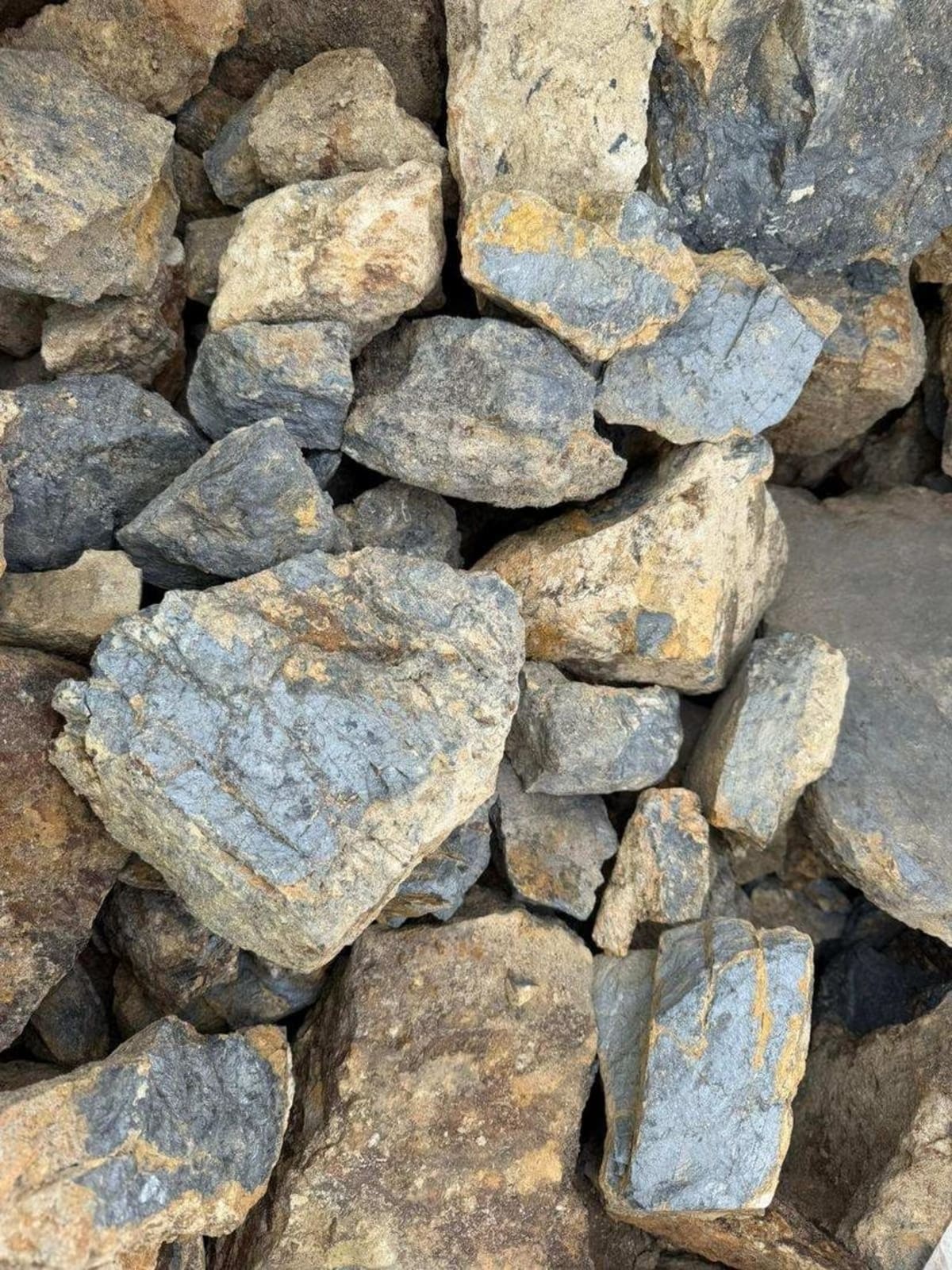

No material environmental incidents, breaches or enforcement actions occurred during FY2026. Photographs show material exposed or extracted at Treasure Creek.
The Company cautions that it is assessing the economic viability of near-term antimony production. No Mineral Resources or Ore Reserves have been declared for antimony, and no JORC-compliant economic studies have been completed. Any progression toward production remains subject to further technical, regulatory and commercial evaluation, permitting approvals and formal Board approval.
Forward-looking statements, Mineral Resources and Competent Person information: See cautionary statements. Visual estimates of mineral abundance should never be considered a proxy or substitute for laboratory analyses where concentrations or grades are the factor of principal economic interest.